
Designed for Time Spent: How Experience Brings Shoppers Back
The number that tells you whether a retail center is working isn’t how many cars pull into the lot. It’s how long people stay once they arrive, and whether they come back next week.
A shopper who parks, buys one thing and leaves is a transaction. A family that spends the afternoon, eats lunch, wanders into three stores and makes plans to return is a relationship. Centers built for relationships outlast centers built for transactions, and the difference is designed in on purpose.
Retail’s real competition
A center isn’t only competing with the center down the road. It’s competing with the phone in every shopper’s pocket. Almost anything sold in a store can be delivered to the front door by tomorrow.
What can’t be delivered is the experience of being somewhere: dinner on a patio, an evening walk under string lights, kids playing in a fountain while their parents sit nearby. When a center offers something worth leaving the house for, shopping follows. When it doesn’t, the shopping goes online.
Design for lingering
People stay where they’re comfortable. That sounds obvious, yet many centers are designed only to move people from parking space to storefront and back.
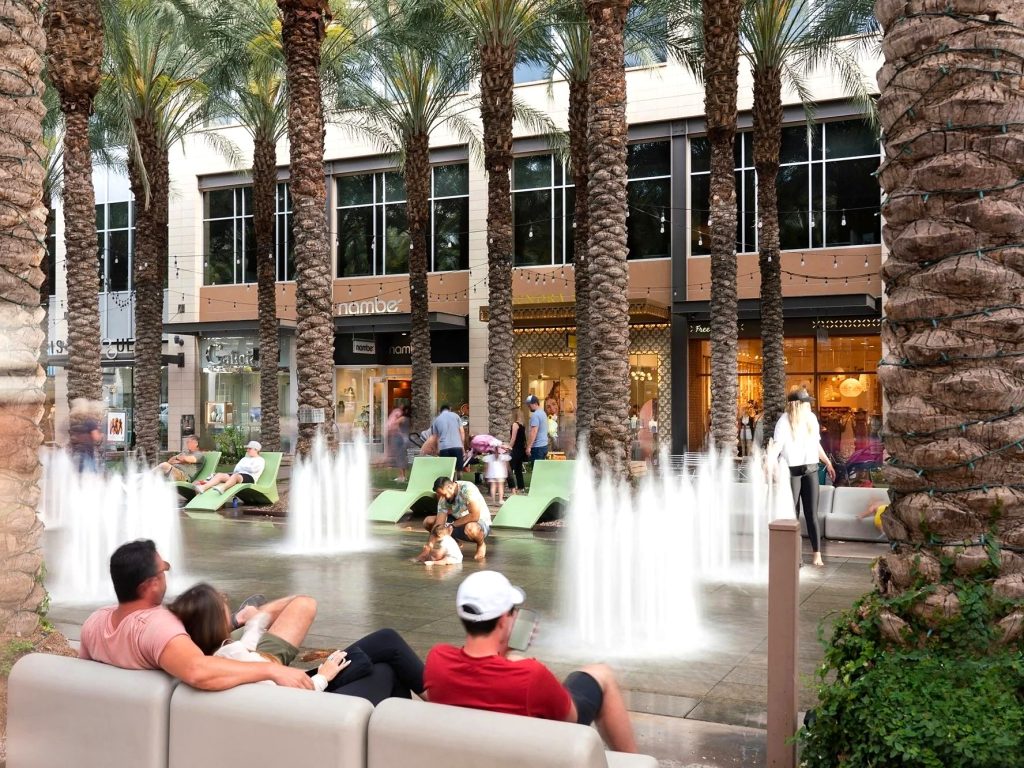
The centers that hold people share a few traits. They’re walkable, so visitors park once and explore on foot. They offer places to sit that aren’t inside a business: benches, lawns, lounge seating. They give people something to look at and gather around, like a fountain, a plaza or a stage.
The fountain plaza at Scottsdale Quarter, a center I leased from the ground up, is a good example. On any given evening there are families lounging under the palms, kids in the water jets and couples on the benches. None of them are shopping at that moment. All of them are spending time at the center, and many will walk into a store or restaurant before they leave.
Restaurants create energy
If there’s one category that defines experience, it’s restaurants. They extend a center’s hours into the evening, they turn a shopping trip into an outing, and they put people on the walkways when the stores alone would be quiet.
Where restaurants sit matters as much as which ones sign. A patio facing the main walkway adds life to the whole block. A restaurant tucked at the back of a pad site adds very little. Corners and ends of walkways are valuable restaurant locations because they pull people past the shops in between.
When I lease restaurant space, I’m looking at more than the operator’s sales history. I’m asking whether the concept will draw a crowd in the evening, whether it can carry a patio, and whether its customers are likely to stay and browse.
Give people a reason to come on a specific day
Good design brings people back. Programming gives them a reason to come on a particular night. Community concerts, outdoor fitness classes on a lawn, holiday lighting and seasonal markets all turn a center into a place on people’s calendars.
At Village at Arrowhead, outdoor concerts fill the walkways with neighbors who bring their own chairs and settle in for the evening. That’s a center doing more than selling. It’s acting as a gathering place for its community, and that loyalty shows up in the stores and restaurants long after the music stops.
The details people feel but never notice
Much of what makes a visit pleasant is invisible until it’s missing. In Arizona, that list starts with shade. A center that offers no relief from the summer sun loses its afternoons, so trees, canopies and covered walkways aren’t decoration. They’re what makes the place usable from May through September.
Lighting matters just as much after dark. Warm, consistent lighting makes a center feel safe and inviting at night. Harsh or uneven lighting, or a dark storefront in the middle of an active block, tells visitors the evening is over. Add clear wayfinding, clean restrooms and an easy walk from parking to the first storefront, and people relax enough to stay.
Leasing for experience
Experience can’t be added after the leases are signed. It must be part of the leasing criteria from the start.
That means asking how each tenant will activate its frontage, whether its hours match the evening life the center needs, and whether its storefront and lighting will meet the project’s design standards. A tenant with a strong concept and a dark, closed-off storefront can drain energy from an entire walkway.
It’s one reason I treat leasing and placemaking as one job. The person negotiating the lease should be the same person protecting the experience the center was designed to deliver.
Measure what matters
Traffic counts tell you how many people arrived. Time spent and return visits tell you whether the center is working. Design for those, and the sales follow.
Planning a center people will want to spend time in? Start a conversation with John.