
What Should a Place Become Known For? Why Identity Comes Before Leasing
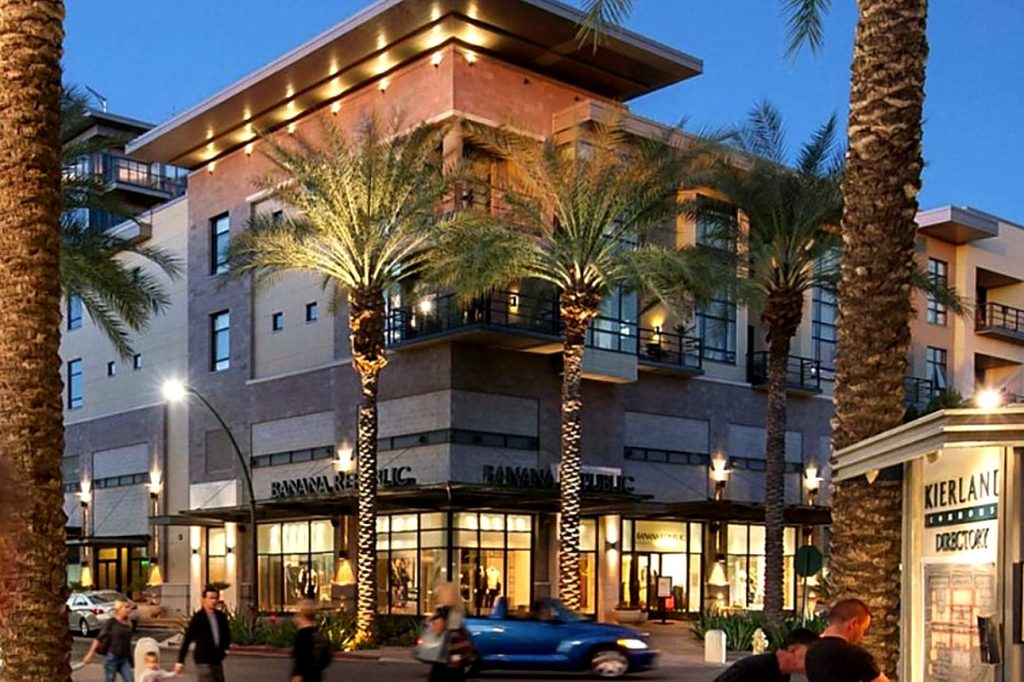
Most retail projects begin with a site plan and a leasing brochure. The question that should come first rarely gets asked out loud: what should this place become known for?
Answer it before the first lease is signed, and every decision that follows has a filter. Skip it, and the tenant roster becomes whoever was ready to sign first. The center ends up known for nothing in particular, which in retail is the same as being known for nothing at all.
I’ve spent 40 years leasing retail centers, including Kierland Commons and Scottsdale Quarter from the ground up. The leases matter, and I still negotiate them myself. But the projects that last are the ones where leasing carried out a plan instead of standing in for one.
Identity is a reason to choose
A center’s identity isn’t its logo or its tagline. It’s the reason someone chooses this place over the three others within a ten-minute drive.
That reason can take many forms. A walkable main street where people come for a stroll and stay for dinner. The neighborhood center where residents run errands and run into each other. The evening destination with patios, music and a crowd. Each is a valid identity. The mistake is trying to be all of them at once, or none of them on purpose.
Identity matters even more when centers sit close together. Kierland Commons and Scottsdale Quarter are neighbors in North Scottsdale. Two centers that close can split the same customers, or each can give people a different reason to come, so the area draws more visitors than either could alone. That outcome isn’t luck. It’s decided long before opening day.
Why leasing cannot go first
Transactional leasing works one deal at a time. A tenant is ready, the rent is acceptable, the space is filled. Each deal looks reasonable on its own. Together they can produce a center with no point of view: a mattress store beside a wine bar, a tax preparer where a patio should be, a mix that gives no one a reason to stay.
The cost compounds because leases are long. A ten-year lease signed for the wrong reason is a ten-year problem. It shapes who else will sign nearby, and it shapes what customers decide the center is for.
This is where being both the strategist and the leasing agent matters. A broker paid only to close deals has every reason to take the first acceptable tenant. When I lease a project, I’m measuring each deal against the identity we agreed on, and sometimes the right answer is to wait for the tenant who fits rather than take the one who’s ready.
How identity gets defined
Defining a center’s identity is practical work, not a branding exercise. It starts with four questions:
- Who is already here? Who lives, works and drives past the site, and what are they leaving the area to find?
- What is missing? The strongest identities fill a gap no nearby center has filled.
- What role should this place play in someone’s week? Daily errands, a weekend outing and a night out call for very different tenants, layouts and hours.
- What will make it feel like it belongs here? A place that reflects its community earns loyalty that a generic one never will.
The answers become leasing criteria. Instead of asking only whether a tenant can pay the rent, we ask whether the tenant strengthens the identity, draws the right customer and fits the hours the center needs to be alive.
Identity shows up in the details
Customers rarely read a mission statement, but they read a storefront instantly. Identity is carried by physical details: the quality of storefronts, how the walkways are lit at night, the signage, the landscaping, the places to sit.
This is why design standards belong in every lease. One tenant with a cheap storefront and harsh lighting can undercut a block of good ones. Landlords who don’t set and enforce those standards end up with a center that looks like a collection of separate decisions, because that’s what it is.
Identity drives turnarounds, too
Identity isn’t only for new development. When a center struggles, the cause is often that it lost its answer to the question or never had one to begin with.
At The Shops at Gainey Village, we took a center that was 40% vacant to fully leased. That meant replacing 21 of its 38 tenants and leasing more than 80,000 square feet. Replacing more than half a center’s tenants isn’t just a leasing campaign. It’s a new answer to what the place should be known for. The center sold for $69.7 million in December 2019.
Start with the question
Every successful center I’ve worked on started with the same question, asked before the first lease and asked again at every lease after. What should this place become known for?
Answer it clearly, and leasing becomes the way the plan gets built. Leave it open, and leasing decides it for you.
Have a project that needs a clearer identity? Start a conversation with John.